Why 5-Minute Uptime Checks Aren't Enough
TL;DR
A 5-minute check interval means up to 10 minutes of undetected downtime per incident once notification delays are factored in. Outages shorter than your check interval are invisible entirely. 30-second monitoring cuts the average detection delay from 2.5 minutes to 15 seconds - a 10x reduction in exposure without paying enterprise rates.
The Problem with 5-Minute Checks
Most monitoring tools default to checking your website every 5 minutes. UptimeRobot’s free tier and dozens of other tools use this interval. It sounds frequent enough to have 288 checks per day, but the math tells a different story.
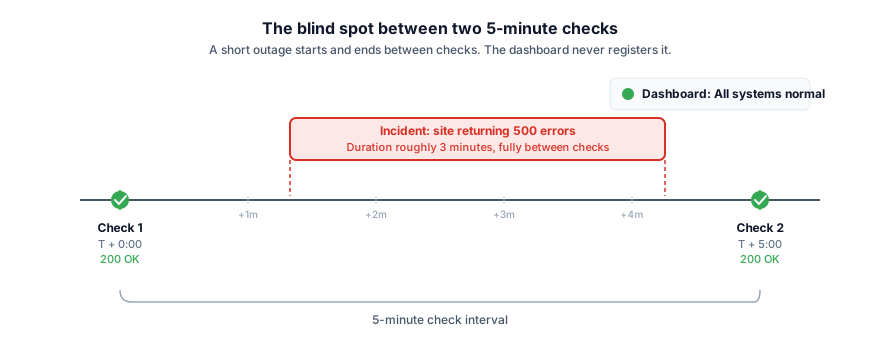
If your site goes down one second after a check, you won’t know about it for 4 minutes and 59 seconds. That’s the best-case detection delay. Now add notification processing time, such as email delivery, webhook retries, SMS queuing, and you’re realistically looking at 6 to 10 minutes of completely silent downtime.
During those minutes, your site is down, your users are seeing errors, and your monitoring dashboard still shows a comforting green status. You’re flying blind.
The Math: Detection Windows Compared
The worst-case detection delay equals your check interval minus one second. Here’s how different intervals compare:
- 15-minute checks: Up to 14 minutes 59 seconds undetected. Common on free tiers and legacy tools.
- 5-minute checks: Up to 4 minutes 59 seconds undetected. The industry default for most paid plans.
- 1-minute checks: Up to 59 seconds undetected. Usually requires an expensive enterprise tier.
- 30-second checks: Up to 29 seconds undetected. The fastest practical interval for HTTP monitoring.
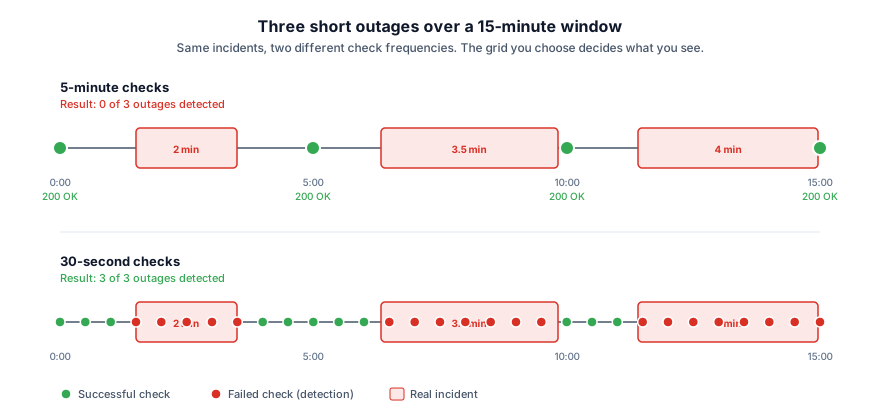
The worst-case scenario is the one that matters. Outages don’t schedule themselves around your check intervals. They happen at random, and on average, your detection delay will be half your interval. With 5-minute checks, that’s a 2.5-minute average delay. With 30-second checks, it’s 15 seconds.
Check intervals compared
How fast each interval catches an outage
Pick an outage length below to see which intervals would notice it before recovery.
- 30 seconds CATCHESMax undetected 29 secondsPer day 2,880 checks
Customer-facing SaaS, e-commerce, APIs with SLAs
- 1 minute CATCHESMax undetected 59 secondsPer day 1,440 checks
Smaller services with moderate revenue impact
- 5 minutes CATCHESMax undetected 4m 59sPer day 288 checks
Internal tools and hobby sites
- 15 minutes CATCHESMax undetected 14m 59sPer day 96 checks
Free-tier monitors. Misses most short outages.
"Max undetected" is the worst-case window an outage can exist before a check flags it. Average detection time is roughly half this number.
Real-World Impact
Detection delay translates directly into money lost. According to a widely cited Gartner estimate, the average cost of website downtime for mid-size businesses runs around $5,600 per minute. At that rate, 5 extra minutes of undetected downtime means $28,000 in additional exposure per incident.
Even for smaller operations, let’s say $10 to $100 per minute in lost revenue and productivity, those 5 minutes cost $50 to $500 every single time. Over a year with multiple incidents, the gap between 30-second and 5-minute monitoring can easily reach four or five figures.
And it’s not just direct revenue. Slower detection means slower response, which means longer total downtime and more eroded trust from your customers. Every minute your team doesn’t know about an outage is a minute they can’t spend fixing it. Detection time is the first domino in your incident response chain.
What Happens During the Blind Spot
While your monitoring tool waits for its next scheduled check, the damage is already compounding:
- Users hit errors: Real visitors are seeing 500 pages, connection timeouts, or broken functionality. They’re not waiting around - they’re leaving.
- Search engines crawl your failures: Google’s crawlers don’t check your monitoring status. If they encounter repeated server errors during crawls, your crawl rate drops and rankings can follow.
- Customer trust erodes: Users who encounter a broken site form lasting impressions. Many won’t come back, and they certainly won’t recommend you.
- Support tickets pile up: Your team starts hearing about the outage from customers before they hear about it from their tools. That’s backwards. There is a reason why you have monitoring: So you hear about issues first!
This is the silent failure window. Your dashboard shows green, your team is unaware, and your users are experiencing the full impact. The longer your check interval, the wider this window gets.
Why Most Tools Default to 5 Minutes
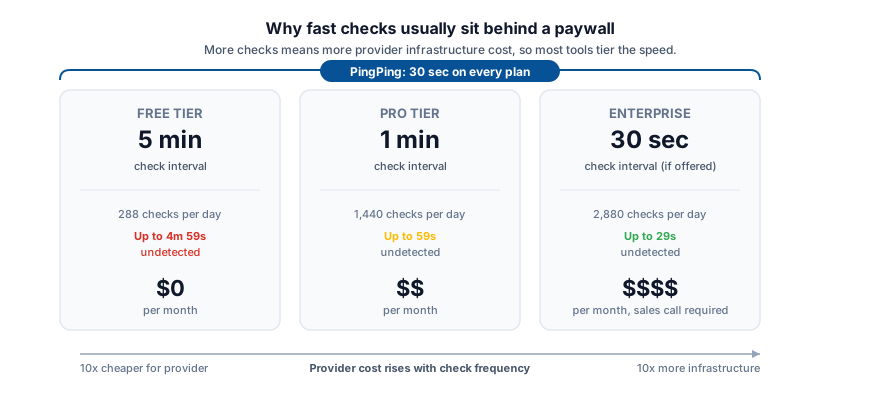
There’s a simple reason most monitoring providers use 5-minute intervals: it’s cheaper for them. Every check requires server resources, network bandwidth, and infrastructure capacity. Checking every 30 seconds instead of every 5 minutes means 10x more checks and 10x more infrastructure cost for the provider.
Most tools handle this by reserving faster check intervals for their most expensive tiers. UptimeRobot’s free plan checks every 5 minutes. Pingdom’s basic tier does the same. Want 1-minute checks? That’ll cost you significantly more. Want 30-second checks? Most tools simply don’t offer them at any price.
This pricing model makes sense for the provider, but it creates a problem for users: the people who need fast detection the most (i.e. small teams without 24/7 NOCs) are the ones least likely to pay enterprise rates. Compare how different tools handle check intervals on our monitoring tools comparison page.
30-Second Monitoring: The PingPing Approach
PingPing checks every 30 seconds on every plan. There’s no tiered interval system where you pay more to detect outages faster. Every website you monitor gets the same 30-second check frequency, whether you’re on the smallest plan or the largest.
But fast checks alone aren’t enough. A single failed check could be a network blip, not a real outage. That’s why PingPing uses multi-location verification: when a check fails from one location, we immediately re-check from additional locations before sending an alert. This eliminates false positives while keeping detection time low.
The result is a monitoring system that catches real outages in under a minute, with virtually zero false alarms. Learn more about how this works in our guide on 30-second monitoring and our overview of uptime monitoring.
The math is straightforward: faster checks mean faster detection, faster response, and less downtime. Five minutes might sound frequent, but when your site is down and nobody knows, every second counts.
Never miss an expiry
PingPing checks every 30 seconds on every plan - no enterprise tier required to detect outages fast.
Related guides
What is 30-second monitoring?
How sub-minute checks work and why the interval makes such a measurable difference to detection time.
What is uptime monitoring?
A full overview of how uptime monitoring works and what to look for in a tool.
The cost of website downtime
The real revenue and trust impact of downtime, with numbers for businesses of every size.